Welcome to Class 1
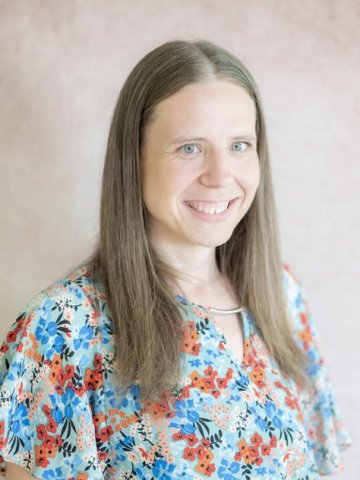
Mrs Tinkler
Head teacher and Class 1 Teacher
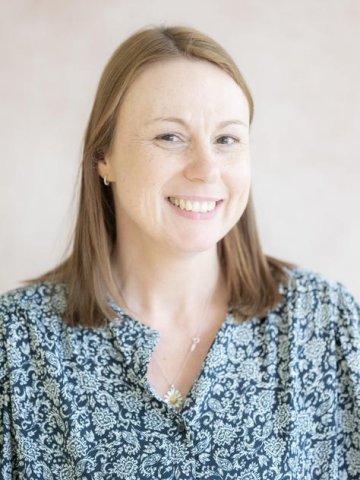
Mrs Moody
Class 1 Teacher
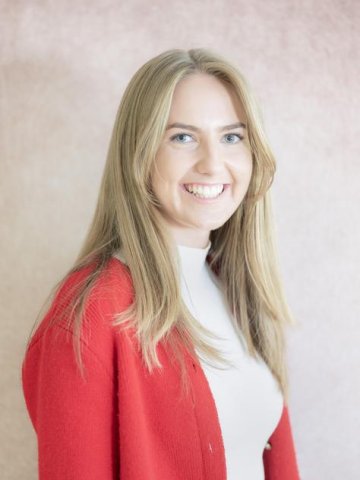
Miss Holmes
Class 1 Teacher
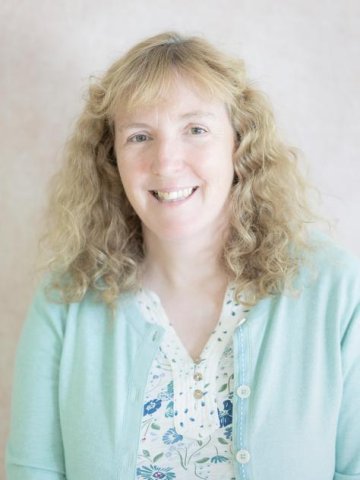
Mrs Rankin
Class 1 TA
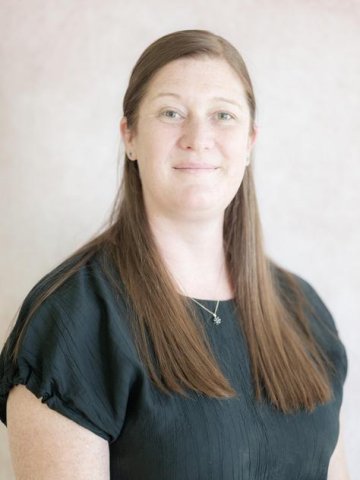
Mrs Bradley
Class 1 TA
In class 1, we have Early Years children, Year 1 and Year 2 children too. We are the youngest members of Bolton Primary School and we love to have lots of fun while we learn. We learn best through play when we are in Reception and we still have lots of opportunities to learn through play when we are in Key Stage 1 too.
Mrs Tinkler, Mrs Moody and Miss Holmes are the class teachers and also working in Class 1 are Mrs Bradley and Mrs Rankin with all year groups throughout the day. Mrs Cousin will be teaching PE to Class 1 and Miss Lowthian teaches the children Science and Music.
Mrs Tinkler will be available to speak to any parents in a morning or after school and can be contacted at any time via email through head@bolton.cumbria.sch.uk
Please click on the colouring pencils below to find out more about Early Years and KS1.
Early Years at Bolton Primary School
At Bolton Primary School, the Reception children are in a class with year 1 and 2 children. Their class teacher is Mrs Tinkler and the Early Years children work with Mrs Moody who is an EY specialist each morning. In an afternoon they also work with Miss Burns and Mrs Rankin too.
Most children attend the privately-run nursery for their pre-school years that is located next to the school. The school has great links with the nursery, and this has led to a very positive transition process for children for the past several years from Pre-school to Reception. For the last year, the school has introduced the opportunity for the Pre-school children to join Reception for a stay and play session for a number of sessions throughout the year and this will continue throughout this year too.
We have high ambitions for all our children and recognise that children have different starting points to their learning. We plan according to children’s stage of development so all can thrive and develop. We aim for children to be well-rounded individuals who are independent, resilient, and confident in themselves and with others.
The Reception children are excited and motivated to learn through rich and challenging learning experiences, opportunities to explore and take risks and first-hand experiences.
We work closely with parents which helps to support children’s transition into Bolton School. We would like parents to feel secure in the knowledge that their child is well cared for and happy at school.
Our parents are welcome to be actively involved in their children’s learning in school and are able to share learning experiences through contributing to their child’s learning journey through Tapestry and also through parent workshops. We recognise that parents are the first educators in children’s lives and value contributions to judgements about children’s development. We use this information to support our assessments and share information about what children need to do next to develop and thrive.
Every day, we provide opportunities for children to come together to share their experiences and have fun. Our children are happy, proud and feel secure knowing that we celebrate their successes and value their achievements. The curriculum is centred around children’s interests with a balance of child-initiated and adult-led learning.
Our learning environment facilitates child-initiated play and provides children with carefully planned opportunities which allow children to explore, create and learn through exciting, stimulating, interactive and accessible resources.
Children learning in Reception are known as the Early Years. We follow the national Early Years Foundation Stage (EYFS) framework.
Early Years Foundation Stage
The EYFS is a very important stage in a child’s life as it helps prepare for school ‘readiness’ as well as preparing them for their future learning and successes. Children’s early years’ experience should be happy, active, exciting, fun and secure; and support their development, care and learning needs. Every child deserves the best possible start in life and the support that enables them to fulfil their potential. Children develop quickly in the early years and a child’s experiences before the age of five will have a major impact on their future life chances.
The EYFS framework explains how and what children will be learning to support their healthy development and provide the foundation children need to make the most of their abilities and talents as they grow up.
The EYFS specifies requirements for learning and development and for safeguarding children and promoting their welfare.
Children will learn skills, acquire new knowledge and demonstrate their understanding through 7 areas of learning and development.
Children should mostly develop the 3 prime areas first. These are:
- Communication and language;
- Physical development; and
- Personal, social and emotional development.
These prime areas are those most essential for a child’s healthy development and future learning.
As children grow, the prime areas will help them to develop skills in 4 specific areas. These are:
- Literacy;
- Mathematics;
- Understanding the world; and
- Expressive arts and design.
All 7 areas of learning are used to plan children’s learning and activities. The professionals teaching and supporting your child at Bolton School will make sure that the activities are suited to your child’s unique needs.
Children in the EYFS learn by playing and exploring, being active, and through creative and critical thinking which takes place both indoors and outside. It is very important that they develop social skills, such as turn-taking, sharing and independence, which help them greatly in the next stages of their learning. The guiding principles that shape our practice in the Early Years are that children are born ready, able and eager to learn. They actively reach out to interact with other people, and in the world around them. Development is not an automatic process, however. It depends on each unique child having opportunities to interact in positive relationships and enabling environments.
This does not mean that all your child's learning is divided up into specific areas. One experience may provide a child with opportunities to develop a number of skills and concepts across several areas of learning. Our expectation is that your child's records will be passed on from Nursery and/or Pre-school groups, enabling us to ensure continuity throughout the Early Years Foundation stage.
Phonics teaching and learning are a key part of the Foundation Stage and help to develop early reading and writing skills. If you visited a Reception class, you would see a range of activities taking place such as role-play, practical games, painting, cutting and sticking and reading in the book corner. You would also see the outdoor classroom in operation, with equipment such as bikes, role play, sand and water.
Children work and play independently, with a strong emphasis on choice and being able to sustain concentration on projects, as well as joining a variety of teacher-led activities.
Early Learning Goals
The EYFS curriculum consists of 17 aspects of learning, at Bolton we provide our pupils with the opportunities the meet the Early Learning Goals in all of these aspects.
Assessment at the end of Reception
Assessment plays an important part in helping parents, carers and practitioners to recognise children’s progress, understand their needs, and to plan activities and support. Ongoing assessment is an integral part of the learning and development process. It involves practitioners observing children to understand their level of achievement, interests and learning styles, and to then shape learning experiences for each child reflecting those observations. In their interactions with children, practitioners should respond to their own day-to-day observations about children’s progress, and observations that parents and carers share. To this end we make systematic observations and assessments of each child's achievements, interests and learning styles. We then use these observations and assessments to identify learning priorities and plan relevant and motivating learning experiences for each child.
Each child’s level of development is assessed against the early learning goals (above). Practitioners will indicate whether children are meeting expected levels of development:
- Emerging - not yet reaching expected levels of development for age
- Expected
The Year 1 teacher is also the Reception teacher, therefore has a full understanding of the Reception end of profile assessments leading to a positive transition for children between Reception into Year 1. The class teacher will have a clear understanding of each child’s stage of development and learning needs and assist with the planning of activities at the start of Year 1.
Parents will have access to the Profile report together with a short commentary on each child’s skills and abilities in relation to the three key characteristics of effective learning.
Please find more information about Early Years at Bolton through our curriculum page (link below).
Year 1 and 2 (KS1) at Bolton Primary School
At Bolton Primary School, the Year 1 and 2 children are in a class with Reception children.
In Year 1 and 2, the children enjoy learning in lots of different ways. The classroom is always busy with lots of exciting learning happening. The children transition in Year 1 really well, as when the children are Reception, they are able to observe the expectations of being a Year 1. The children are ready for a challenge. There are more teacher-led opportunities, however children continue to have opportunities to be challenged through continuous provision. The children complete challenges independently in the areas linked to learning objectives we are trying to master. This allows them to practice and show their understanding and skills from their learning in core and foundation subjects.
Year 1 and 2 children enjoy learning in lots of different ways, such as in groups, partners or on their own. They have daily sessions of English, Maths and Phonics and weekly sessions of Science, Geography, History, Design Technology, Art, Computing, Music PHSE and RE. They develop their physical skills through weekly PE sessions and games at playtimes.
The Year 1 and 2 children enjoy taking part in after school clubs, such as archery, baking, crafts and many more throughout the year with Reception children.
All information about the curriculum coverage and learning objective for all subjects can be found on our curriculum page – please click on the link below.
At Bolton Primary School we believe that for all our children to become fluent readers and writers, phonics must be taught through a systematic and structured phonics programme.
We use the Little Wandle Letters and Sounds Revised to plan and provide daily engaging phonics lessons. In phonics, we teach children that the letters of the alphabet represent a different sound, that these can be used in a variety of combinations and are put together to make words. The children learn to recognise all of the different sounds and combinations that they might see when they are reading or writing. Our phonics teaching starts in Reception and follows a very specific sequence that allows our children to build on their previous phonic knowledge and master specific phonic strategies as they move through school. As a result, all our children are able to tackle any unfamiliar words that they might discover. At Bolton we also model these strategies in shared reading and writing both inside and outside of the phonics lesson and across the curriculum. We have a strong focus on the development of language skills for our children because we know that speaking and listening are crucial skills for reading and writing in all subjects.
How we teach phonics
- In reception and Y1, children follow the progression within Little Wandle Letters and Sounds Revised programme. Phonics is taught daily and there is a review session on a Friday.
- Phonics starts in reception in week 2 to ensure the children make a strong start.
- By the end of reception, children will have been taught up to the end of phase 4.
- By the end of year 1, children will have been taught up to the end of phase 5.
- Reception lessons start at 10 minutes, with daily additional oral blending – increasing to 30 minutes as soon as possible.
- Y1 lessons are 30 minutes long.
- In Y2, phonic lessons are taught daily to children where appropriate – following the model of Little Wandle but plugging specific gaps identified through assessment.
- From Spring 2023: In Y3-Y6 there will be planned phonic ‘catch-up’ sessions following a set model to address specific reading/writing gaps. These will be short, sharp sessions lasting 10 minutes in length and taking place at least three times a week.
Reading practice sessions
- Children across reception, year 1, year 2 (and beyond if appropriate) apply their phonics knowledge by using a full matched decodable reader in a small group reading practice session.
- These sessions are 15 minutes long and happen three times a week. There are approximately 4-8 children in a group.
- The sessions follow the model set out in Little Wandle Letters and Sounds Revised.
- The children then take the same book home as an e-book after the reading sessions to ensure success is shared with the family.
- In reception these sessions start in week 4. Children who are not decoding, do a little blending lesson, following the model set out in Little Wandle Letters and Sound Revised.
How do we assess phonic knowledge?
- In reception and year 1, at the end of each week there is a review session which recaps the learning. There are also whole review weeks (pre-planned and bespoke review weeks to address gaps identified by the class teacher’s ongoing formative assessment).
- Children identified in reception and Y1 as in danger of falling behind are immediately identified and daily ‘keep up’ sessions are put in place – sessions follow the Little Wandle Letters and Sounds Revised programme.
- In reception and year 1, the children are assessed at the end of every half term using the Little Wandle Letters and Sounds Revised assessment tracker.
- The children in Y1 sit the Phonics Screening Check in the summer term.
- Children who do not pass the Phonics Screening Check in Y1, will re-sit this in Y2.
- Children who are in Y2-Y6 and need ‘catch up’ sessions are assessed through teacher’s ongoing formative assessment as well as half termly summative assessments.
If you are a parent and would like more information about how to support your child with phonics at home, please follow this link to find the Reception and Year 1 overview as well as videos of the sound pronunciations, letter formation sheets and other helpful resources.
https://www.littlewandlelettersandsounds.org.uk/resources/for-parents/
Class 1 Photos
Online Games

School Dinners
